
A Sweet Journey: Europe's Most Beloved Easter Treats

Introduction: The Sweet Side of Easter Across Europe
Easter isn't just about solemn traditions; it's also a time for vibrant celebrations, new beginnings, and, perhaps most deliciously, an abundance of sweet treats! From intricate braided breads to decadent chocolate creations, European cultures have truly mastered the art of Easter desserts. These aren't just mere sweets; they're edible traditions, often steeped in symbolism and passed down through generations.
Join us on a culinary tour as we explore some truly unique and mouth-watering Easter sweets from Greece, Italy, France, Ireland, Germany, Poland, and Denmark. Get ready to bake, taste, and celebrate the spring season with these delightful recipes!
Greece: Tsoureki – The Braided Bread of Resurrection
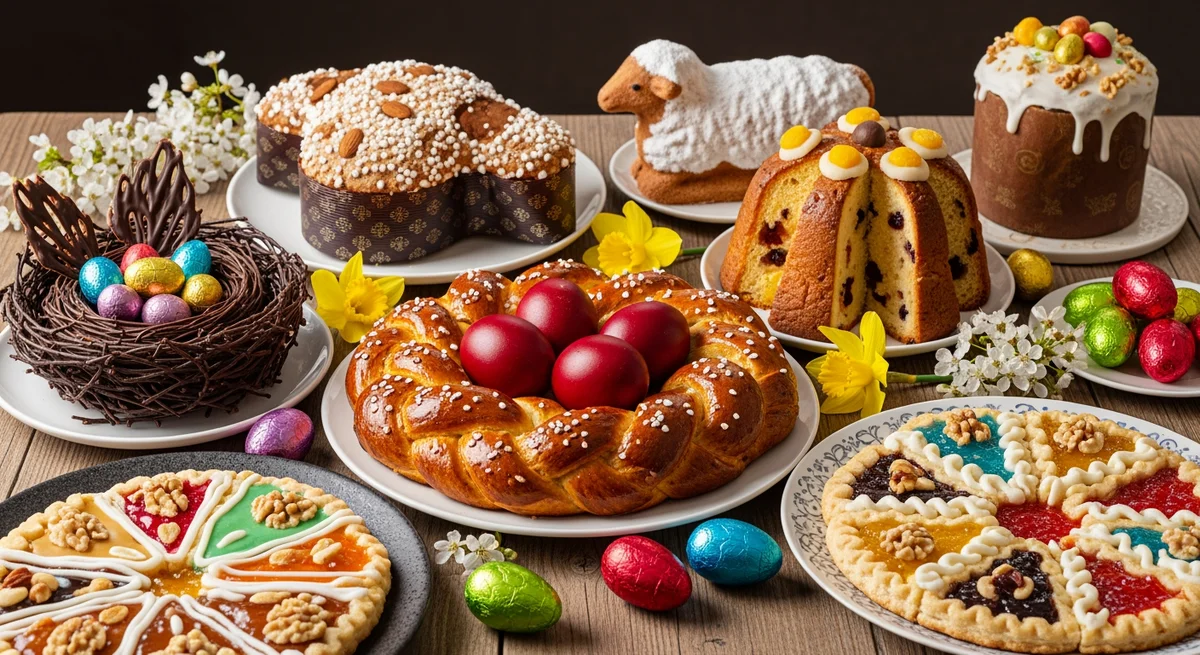
In Greece, Easter is the most significant holiday, and its culinary traditions are deeply meaningful. While lamb is the main course, Tsoureki takes center stage on the dessert table. This beautiful, braided sweet bread is more than just delicious; its three-strand braid often symbolizes the Holy Trinity, and it's frequently adorned with bright red-dyed hard-boiled eggs, representing the blood of Christ and new life. Infused with aromatic spices like mahlab and mastic, Tsoureki has a unique flavor and a wonderfully soft, slightly chewy texture that makes it irresistible.
It's a labor of love to make, but entirely worth it for the aroma that fills your kitchen and the joy it brings to your Easter celebration.
Get the Recipe for Greek Tsoureki:

Italy: Colomba di Pasqua – The Dove of Peace
Italy, a country renowned for its rich culinary heritage, brings us the Colomba di Pasqua, or "Easter Dove." This sweet, yeasted bread is similar in texture to panettone but shaped distinctly like a dove, symbolizing peace and new beginnings. It's typically made with high-quality flour, eggs, sugar, butter, and candied orange peel, then topped with pearl sugar and almonds before baking. The result is a light, airy, and fragrant cake that’s perfect for sharing after Easter Sunday lunch or as a sweet snack with coffee.
Many Italian families have their own cherished recipes, passed down through generations, ensuring this iconic cake graces every Easter table.
Get the Recipe for Italian Colomba di Pasqua:

France: Nid de Pâques – The Chocolate Easter Nest Cake
While French bakeries overflow with exquisite chocolate eggs and intricate pastries during Easter, a charming and widely loved homemade treat is the Nid de Pâques, or "Easter Nest Cake." This delightful dessert often features a rich chocolate mousse or ganache, artfully arranged to resemble a bird's nest. It can be made with a sponge cake base or even just as a pure mousse creation, then decorated with edible mini chocolate eggs, often painted or filled, and sometimes even a few chocolate "feathers" or green frosting "grass."
It's a beautiful centerpiece that captures the essence of spring and new life, making it a favorite for children and adults alike.
Get the Recipe for French Nid de Pâques:

Ireland: Simnel Cake – A Marzipan-Topped Tradition
In Ireland, and across the UK, the Simnel Cake is a traditional fruit cake enjoyed around Easter. Its origins are said to date back to medieval times, and it's traditionally associated with Mothering Sunday (the fourth Sunday of Lent). What makes a Simnel Cake truly unique is the layer of marzipan baked into the middle and another layer on top, often toasted to a golden hue. The cake is then famously decorated with eleven marzipan balls, representing the eleven faithful apostles (excluding Judas).
It’s a rich, comforting cake, perfect with a cup of tea, and a lovely way to celebrate the arrival of spring.
Get the Recipe for Irish Simnel Cake:

Germany: Osterlamm – The Easter Lamb Cake
The symbolism of the lamb is strong in Christian traditions, and in Germany, this is sweetly expressed through the Osterlamm, or "Easter Lamb Cake." This tender sponge cake is baked in a special lamb-shaped mold and then dusted generously with powdered sugar to resemble a fluffy white lamb. Often, a ribbon is tied around its neck, and sometimes small flags are added. It’s a gentle, charming centerpiece for the Easter breakfast or coffee table, embodying innocence and sacrifice.
Simple yet elegant, the Osterlamm is a beloved German tradition that brings a touch of whimsy and meaning to the Easter feast.
Get the Recipe for German Osterlamm:

Poland: Mazurek – The Flat, Artistic Easter Cake
Poland's Easter tables are adorned with an array of beautiful and delicious treats, but the Mazurek truly stands out. This is not just a cake; it's a work of art! Mazurek is a very flat, shortbread-like cake, traditionally made with a thin layer of pastry topped with various fillings like fruit jams, nuts, chocolate, or poppy seeds. What makes it so special is the intricate and often elaborate decoration. Bakers use nuts, dried fruits, chocolate drizzles, and sometimes even intricate marzipan designs to create stunning patterns, often depicting Easter motifs.
Each Mazurek is a unique expression of spring and celebration, making it a joy to behold and even more delightful to eat.
Get the Recipe for Polish Mazurek:

Denmark: Påskeæg – The Marzipan Easter Eggs
While many countries have chocolate eggs, Denmark puts a delightful twist on them with their traditional Påskeæg (Easter Eggs), particularly those made with marzipan. These aren't your typical mass-produced eggs; they're often handcrafted, combining rich marzipan (a sweet almond paste) with other fillings like nougat, rum, or other liqueurs. They are then frequently dipped in high-quality dark chocolate and sometimes decorated with sprinkles or drizzles.
These sweet, dense, and utterly delicious treats are a staple in Danish Easter baskets and a testament to the country's love for marzipan.
Get the Recipe for Danish Påskeæg:

Conclusion: A Continent of Sweet Traditions
From the braided beauty of Greek Tsoureki to the artistic Polish Mazurek, and the comforting Irish Simnel Cake, Europe offers an incredible array of Easter sweets that are as diverse as they are delicious. Each treat tells a story, carrying with it centuries of tradition, family recipes, and the joyous spirit of spring and rebirth.
We hope this sweet journey inspires you to try your hand at some of these European delights this Easter. Happy baking, and Happy Easter!