
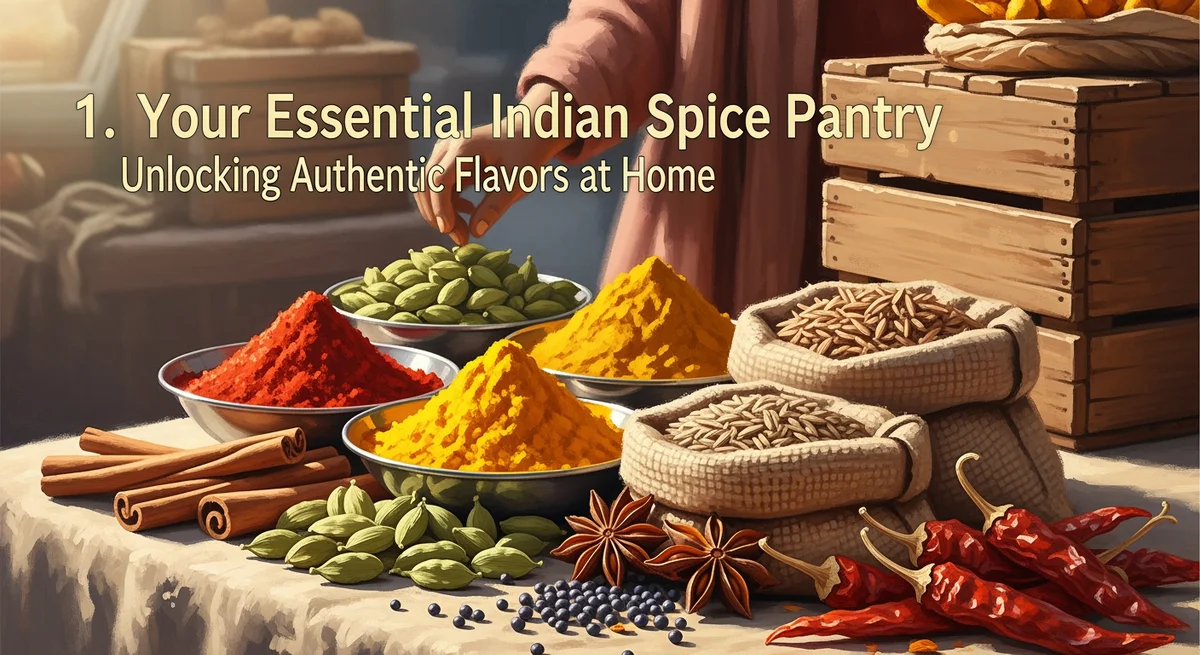
Your Essential Indian Spice Pantry: Unlocking Authentic Flavors at Home

Welcome to the World of Indian Spices!
Ever wondered how Indian food gets its incredible depth, warmth, and vibrant flavors? The secret lies in a rich tapestry of spices! For a beginner, it can seem a little intimidating, but trust me, once you get started, you'll see just how magical and versatile these ingredients are. Building an essential Indian spice pantry isn't just about stocking your shelves; it's about opening a gateway to a whole new culinary adventure.
Think of spices as the soul of Indian cooking. They don't just add heat; they contribute aroma, color, texture, and a complex symphony of tastes – from earthy and sweet to pungent and citrusy. Ready to dive in and transform your home cooking?
The Foundation: Whole Spices (The Aromatic Architects)
Whole spices are often the first to hit the hot oil or ghee in an Indian dish, a process called tempering or tadka. This wakes them up, releasing their essential oils and infusing the fat with their unique flavors, which then permeates the entire dish. Don't skip these!
1. Cumin Seeds (Jeera)
These tiny, boat-shaped seeds are non-negotiable. Cumin has a warm, earthy, slightly bitter, and pungent flavor. It's used in almost every savory Indian dish.
- How to use: Temper whole seeds in hot oil at the start of cooking, or dry roast and grind for a deeper, nuttier flavor in spice blends.
- Flavor Profile: Earthy, warm, slightly bitter.
2. Coriander Seeds (Dhaniya)
Coriander seeds are the dried fruit of the cilantro plant. They have a wonderfully citrusy, sweet, and slightly peppery aroma. They bring balance and a delicate floral note.
- How to use: Often toasted and ground to a powder for curries and spice blends. Whole seeds can also be tempered for specific dishes, adding texture and burst of flavor.
- Flavor Profile: Citrusy, sweet, floral, mild.
3. Green Cardamom Pods (Choti Elaichi)
The queen of spices! These fragrant green pods contain tiny black seeds with an intensely sweet, floral, and slightly citrusy aroma. Crucial for both sweet and savory dishes.
- How to use: Lightly crush pods and add whole to hot oil/ghee for tempering, or add to simmering curries and rice dishes. Seeds can be removed and ground for desserts or fine spice blends.
- Flavor Profile: Sweet, floral, highly aromatic.
4. Cloves (Laung)
Small, nail-shaped flower buds that pack a powerful, warm, sweet, and pungent punch. Use sparingly as their flavor is strong.
- How to use: Add whole to tempering or simmering dishes like biryanis, curries, and stews. Often paired with cinnamon and cardamom.
- Flavor Profile: Warm, sweet, pungent, woody.
5. Black Peppercorns (Kali Mirch)
While often taken for granted, freshly ground black pepper adds a vibrant sharpness and a subtle heat that is distinct from chili powder.
- How to use: Use whole in tempering or in slow-cooked dishes. Freshly ground pepper is excellent as a finishing spice or in marinades.
- Flavor Profile: Pungent, sharp, warm heat.
6. Cinnamon Sticks (Dalchini)
Sweet and woody, cinnamon sticks impart a wonderful warmth and depth to dishes. Indian cinnamon is often thinner and more delicate than Ceylon cinnamon.
- How to use: Add whole sticks to hot oil/ghee at the start of cooking or during simmering. Remove before serving if preferred.
- Flavor Profile: Sweet, woody, warm, aromatic.
7. Dried Red Chillies (Sabut Lal Mirch)
These whole dried chillies provide both heat and a smoky, fruity flavor. Different varieties offer varying levels of heat.
- How to use: Temper whole in hot oil/ghee until fragrant (be careful not to burn) or break them into pieces for more heat. Can also be dry roasted and ground.
- Flavor Profile: Smoky, fruity, fiery.
8. Fenugreek Seeds (Methi Dana)
Small, yellowish-brown seeds with a distinctively bitter, slightly sweet, and earthy flavor. Use judiciously as too much can overpower.
- How to use: Temper in hot oil/ghee until light brown (do not burn, or they will become overly bitter). Essential in many lentil (dal) and vegetable dishes.
- Flavor Profile: Bitter, earthy, maple-like when cooked properly.
9. Mustard Seeds (Rai / Sarson)
Tiny seeds that come in black, brown, or yellow varieties. When tempered in hot oil, they pop and release a pungent, nutty, and slightly sharp flavor.
- How to use: Add whole to hot oil/ghee and cook until they start to pop (cover to avoid splashing!). A staple in South Indian tempering.
- Flavor Profile: Pungent, sharp, nutty.
The Flavor Boosters: Ground Spices (The Everyday Essentials)
These powdered spices are the workhorses of Indian cooking, adding color, body, and consistent flavor throughout your dishes.
1. Turmeric Powder (Haldi)
Instantly recognizable for its bright yellow hue, turmeric is a powerhouse of flavor and health benefits. It offers an earthy, slightly bitter, and warm taste.
- How to use: Add a pinch or two to almost any savory dish. It's often added early in the cooking process with aromatics to mellow its flavor.
- Flavor Profile: Earthy, warm, slightly bitter, vibrant color.
2. Red Chili Powder (Lal Mirch Powder)
This provides the heat and a beautiful red color to Indian dishes. Varieties like Kashmiri chili powder offer more color than heat, while others like Byadagi or Guntur are spicier.
- How to use: Add to curries, stir-fries, and marinades. Adjust quantity based on desired heat level.
- Flavor Profile: Fiery, can be fruity or smoky depending on variety.
3. Garam Masala
Meaning "warm spice blend," Garam Masala is a fragrant mix of roasted and ground spices (often including cinnamon, cardamom, cloves, cumin, coriander, and black pepper). It's typically added at the end of cooking to boost aroma and flavor.
- How to use: Sprinkle a teaspoon or two towards the end of cooking curries, stews, or even on roasted vegetables. It's usually not cooked for long.
- Flavor Profile: Warm, complex, aromatic, savory.
4. Asafoetida (Hing)
A pungent, resinous spice derived from a root. It has a strong, garlic- and onion-like aroma when raw, which mellows beautifully when cooked, adding umami. Essential for many vegetarian dishes.
- How to use: A tiny pinch (it's potent!) is added to hot oil/ghee during tempering, usually after whole spices but before aromatics like onion/garlic.
- Flavor Profile: Pungent, garlicky, oniony (raw); savory, umami (cooked).
5. Ground Cumin Powder (Bhuna Jeera Powder)
While whole cumin is essential, having ground cumin powder on hand saves time. It offers the same earthy, warm notes, often a bit more subtle than freshly ground, roasted seeds.
- How to use: Add directly to curries, yogurt raita, or sprinkle on salads.
- Flavor Profile: Earthy, warm.
6. Ground Coriander Powder (Dhaniya Powder)
Another convenience spice, ground coriander powder provides the citrusy, sweet, and floral balance. It's a key ingredient in many curry bases.
- How to use: Add along with turmeric and chili powder to the base of curries and gravies, cooking thoroughly to bloom its flavor.
- Flavor Profile: Citrusy, sweet, floral, mild.
Essential Tips for Your Spice Journey
- Buy Whole, Grind Fresh: Whenever possible, buy whole spices and grind them fresh in a spice grinder or mortar and pestle. This unlocks maximum flavor and aroma.
- Buy Small Quantities: Spices lose potency over time. Buy smaller amounts more frequently, especially for ground spices, to ensure freshness.
- Store Properly: Keep all your spices in airtight containers, away from direct sunlight, heat, and moisture. A cool, dark pantry is ideal.
- Toast for Flavor (Dry Roasting): Many whole spices benefit from a quick dry roast in a hot, dry pan before grinding or adding to a dish. This enhances their aroma and deepens their flavor.
- Learn Tempering (Tadka): Mastering the art of tempering is fundamental. It's where the magic begins, infusing your cooking oil with incredible spice flavors.
Conclusion: Your Culinary Adventure Awaits!
Building your essential Indian spice pantry is an exciting first step towards creating authentic, flavorful Indian meals at home. Don't be afraid to experiment, taste as you go, and adjust spices to your preference. With these foundational spices, you're well-equipped to explore a vibrant world of culinary possibilities. Happy cooking!