
Bumbu Dasar: Indonesia's 3 Essential Spice Pastes (Red, White & Yellow)

The Heart of Indonesian Cooking: Bumbu Dasar
In Western cooking, we talk about "mother sauces" – foundational bases that form the starting point for countless dishes. Well, if you've ever wondered about the incredible depth and complexity of Indonesian flavors, you've stumbled upon Indonesia's very own version: Bumbu Dasar. These aren't just spice blends; they are the soul of the cuisine, the secret behind why so many dishes taste so rich, comforting, and uniquely Indonesian.
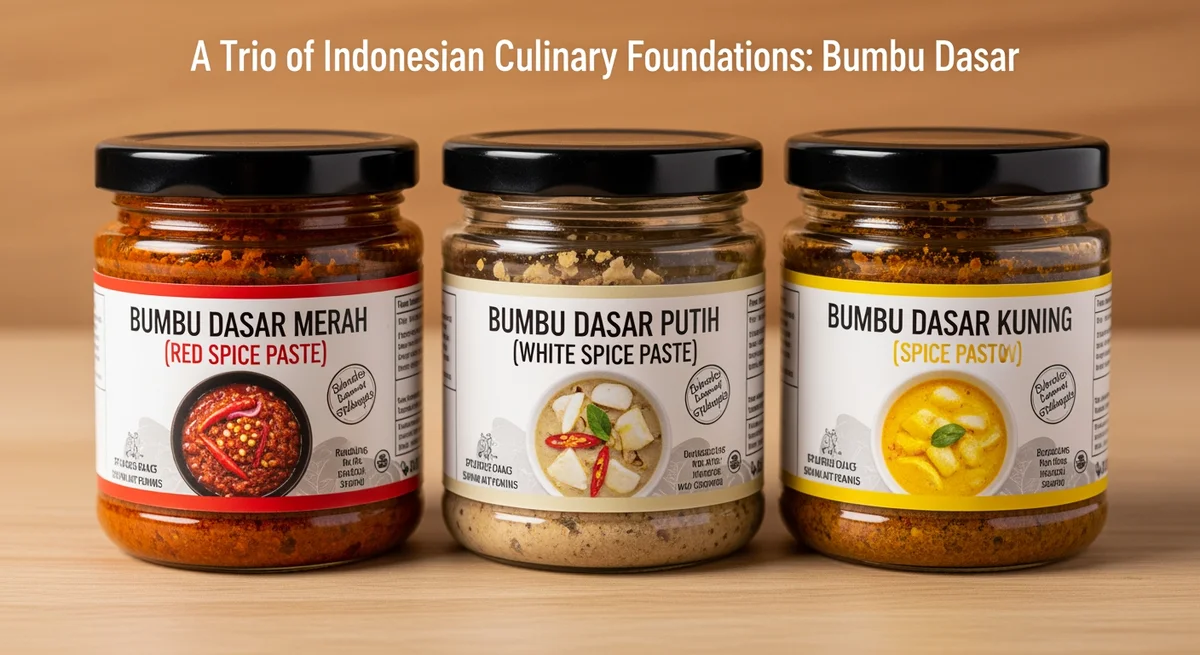
As you mentioned, for those of us who grew up with these flavors, they were just there. They weren't explained; they were simply the backdrop to every meal, the aromatic whisper from the kitchen. But as you start to cook more intentionally and explore recipes, the true power of these bumbu (spice pastes) reveals itself. They are a marvel of culinary efficiency, simplifying complexity and allowing for an astonishing variety of dishes from just three core preparations: Bumbu Putih (White Paste), Bumbu Merah (Red Paste), and Bumbu Kuning (Yellow Paste).
Once you understand and master these three, cooking Indonesian food transforms from following rigid recipes to an intuitive dance of flavors. One base can be the springboard for many different culinary creations, simply by adjusting a few ingredients or techniques. It's a beautiful concept that streamlines cooking without sacrificing any of the incredible taste.
Bumbu Putih: The Gentle Aromatic Base
Bumbu Putih, or "white paste," is often the mildest of the trio, but don't let its gentleness fool you – it's incredibly aromatic and forms the backbone of many creamy, savory dishes. Its color comes from a lack of chilies and turmeric, focusing instead on a blend of white-hued aromatics.
Key Ingredients:
- Shallots (Bawang Merah): The most prominent aromatic, providing a sweet, pungent base.
- Garlic (Bawang Putih): Essential for its pungent depth.
- Candlenuts (Kemiri): These give the
bumbua creamy texture and nutty richness, also acting as a thickener. - White Pepper (Lada Putih): Adds a subtle warmth.
- Galangal (Lengkuas): Aromatic root that adds an earthy, slightly citrusy note.
- Ginger (Jahe): For a fresh, piquant kick.
Flavor Profile:
Mildly savory, creamy, and wonderfully fragrant. It provides a subtle richness that enhances other ingredients without overpowering them.
Where it Shines:
Bumbu Putih is perfect for dishes where you want a rich, savory depth without much spice. Think creamy curries, braised dishes, and clear soups.
Try it in these dishes:
- Opor Ayam: A classic Indonesian chicken dish cooked in a rich, fragrant coconut milk sauce. The Bumbu Putih provides the signature aromatic foundation.
- Sayur Lodeh: A comforting vegetable stew cooked in coconut milk, often featuring a variety of local vegetables. Bumbu Putih ensures a beautifully balanced, savory broth.
Bumbu Merah: The Fiery, Flavorful Heart
Bumbu Merah, or "red paste," is all about vibrant color and a delightful kick. It's the go-to for dishes that boast a beautiful red hue and a spicy, rich flavor. While chilies are central, it's not just about heat; it's about a complex, layered spiciness that awakens the palate.
Key Ingredients:
- Red Chilies (Cabai Merah Besar/Keriting): The star! The amount and type determine the heat level. Often a mix of large red chilies for color and smaller ones for heat.
- Shallots (Bawang Merah) & Garlic (Bawang Putih): Provide the aromatic foundation.
- Candlenuts (Kemiri): Again, for creaminess and to mellow the heat slightly.
- Tomatoes (Tomat): Sometimes added for a touch of acidity and extra red color.
- Terasi (Shrimp Paste): A small amount for umami depth (optional, but highly recommended for authentic flavor).
Flavor Profile:
Spicy, vibrant, rich, and often a little sweet. It delivers a punch of flavor that's both exciting and deeply satisfying.
Where it Shines:
This bumbu is used for stir-fries, saucy dishes, and anything that needs a bold, spicy character. It's incredibly versatile for adding a vibrant kick.
Try it in these dishes:
- Sambal Goreng Kentang: Spicy fried potatoes cooked with Bumbu Merah, often including other ingredients like tempeh or petai (stink beans). It's a side dish that packs a serious flavor punch.
- Nasi Goreng (Fried Rice): While many variations exist, a classic Nasi Goreng often starts with Bumbu Merah to give it that signature savory, slightly spicy, and deeply aromatic profile. It transforms simple rice into a meal.

Bumbu Kuning: The Golden Earthiness
Bumbu Kuning, or "yellow paste," gets its distinct color and earthy aroma from turmeric. It's incredibly fragrant, often featuring a symphony of roots and spices that give dishes a warm, inviting golden hue and a complex, herbaceous flavor.
Key Ingredients:
- Turmeric (Kunyit): The defining ingredient, responsible for the vibrant yellow color and earthy, slightly bitter notes.
- Shallots (Bawang Merah) & Garlic (Bawang Putih): As always, the aromatic backbone.
- Candlenuts (Kemiri): For richness and texture.
- Ginger (Jahe) & Galangal (Lengkuas): Provide pungent, citrusy, and earthy undertones.
- Coriander (Ketumbar) & Cumin (Jintan): Often included for warm, aromatic depth.
Flavor Profile:
Earthy, aromatic, warm, and often slightly pungent. The turmeric provides a distinctive, wholesome flavor that is both comforting and exotic.
Where it Shines:
Bumbu Kuning is a staple for marinades, especially for fried or grilled meats and poultry, as well as many soups and curries where a distinct earthy fragrance is desired.
Try it in these dishes:
- Ayam Goreng Kuning (Yellow Fried Chicken): Chicken marinated in Bumbu Kuning and then deep-fried until crispy and golden. The
bumbuinfuses the chicken with incredible flavor.
- Sate Ayam (Chicken Satay): While peanut sauce is famous, the chicken itself is often marinated in a Bumbu Kuning variation before grilling, giving it a depth of flavor before even touching the sauce.
Making Bumbu Dasar at Home: Your Culinary Superpower
The beauty of bumbu dasar is that you can make a batch ahead of time and store it, transforming your weeknight cooking. Imagine having these flavor bombs ready to go – it makes preparing an authentic Indonesian meal almost as fast as a stir-fry!
How to Make Them:
Traditionally, bumbu are made by grinding fresh ingredients with a mortar and pestle (called an ulekan in Indonesia). This method releases the oils and aromas beautifully. However, a food processor or blender works perfectly well for convenience, especially if you're making a larger batch. Just add a little oil or water to help the blades work.
- Prep: Peel and roughly chop all the ingredients for your chosen
bumbu. - Grind/Blend: Place all ingredients into a food processor or
ulekan.- For a food processor/blender: Add
1-2 tablespoonsof cooking oil or water to help it blend into a smooth paste. - For mortar and pestle: Grind in batches until a smooth, fragrant paste forms.
- For a food processor/blender: Add
- Sauté (Optional but Recommended): For better flavor development and preservation, gently sauté the fresh
bumbuin a pan with a little oil over medium-low heat until fragrant and the raw smell disappears (about10-15 minutes). This step, calledmenumis, is crucial for deepening the flavors.
Storage Tips:
- Refrigerate: Store the sautéed
bumbuin an airtight container in the refrigerator for up to1-2 weeks. - Freeze: For longer storage, freeze portions of the
bumbuin ice cube trays or small containers. Once frozen, transfer the cubes to a freezer-safe bag. They can last for2-3 monthsor even longer.
Unlocking a World of Flavor
Having these bumbu dasar ready in your fridge or freezer is like having a shortcut to incredible flavor. They are the versatile building blocks that allow you to explore the vast and delicious landscape of Indonesian cuisine with confidence and ease. No longer will you feel daunted by long ingredient lists; instead, you'll reach for your homemade bumbu and unleash the magic.
So, next time you're planning your meals, consider whipping up a batch of Bumbu Putih, Merah, or Kuning. You'll not only save time but also embark on a delicious journey into the very heart of Indonesian cooking. Happy cooking, and selamat makan!