
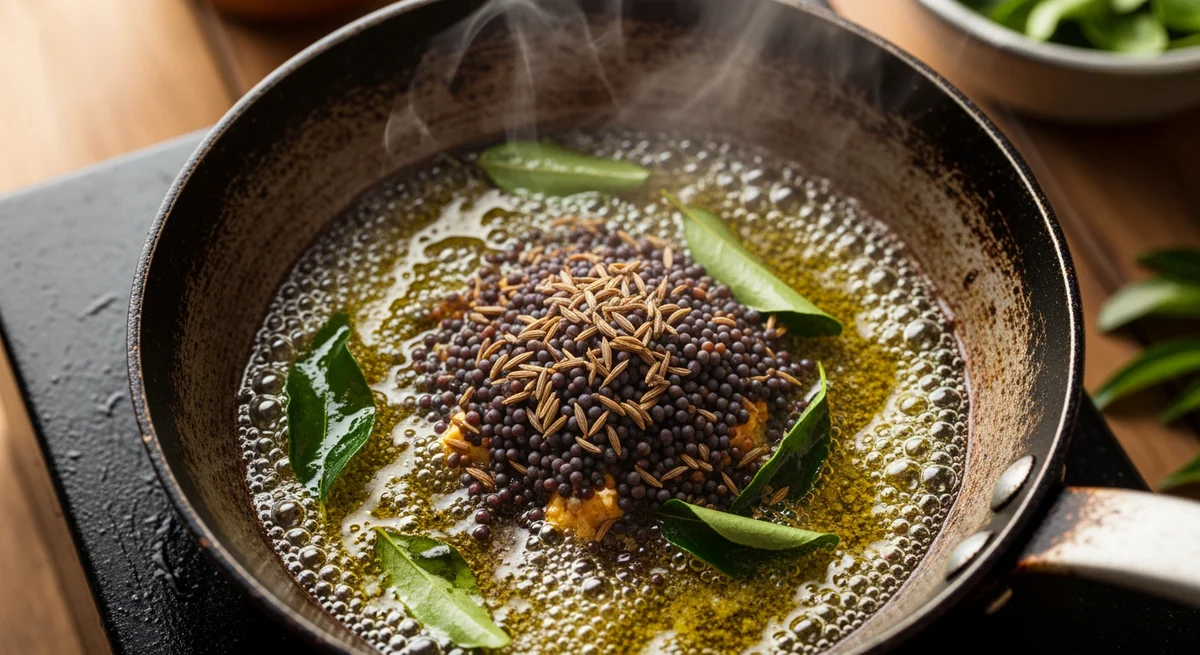
The Sizzle and Science of Tarka: Mastering Flavor Extraction

What's That Sizzle? Unpacking the Magic of Tarka
Ever wonder why some dishes just explode with flavor, while others fall a bit flat, even with the same spices? The secret often lies in a technique called tarka (also known as tempering or chaunk). It's a cornerstone of Indian cooking, but its principles apply across many cuisines where spices meet hot oil.
At its heart, tarka is about coaxing the full, vibrant essence out of your spices by briefly frying them in hot fat. It's not just about heating them up; it's a precise dance between temperature, time, and the chemical compounds within your spices. Think of it as a flavor awakening! When done right, tarka transforms raw, sometimes harsh, spices into fragrant, mellow, and deeply aromatic treasures that infuse your entire dish.
The Scientific Sip: Why Fat is Your Flavor Friend
So, what's actually happening when you drop those tiny seeds into shimmering oil? It all comes down to fat-soluble compounds. Many of the most aromatic and flavorful molecules in spices, like eugenol in cloves, curcumin in turmeric, or the pungent compounds in mustard seeds, are hydrophobic – they don't dissolve well in water. But they absolutely love fat.
When these spices hit hot oil, the fat acts as a solvent, efficiently extracting these flavor compounds. The heat accelerates this process, breaking down cell walls and releasing the trapped aromas. It's like unlocking a hidden treasure chest of deliciousness. Once these compounds are dissolved in the oil, they're then evenly dispersed throughout your dish, whether it's a lentil soup, a vegetable curry, or a simple rice pilaf.
Kitchen Chemistry Fact: Water-soluble compounds, like those responsible for the bitterness in some herbs or the heat of capsaicin (which is technically fat-soluble but also water-dispersible in some contexts), behave differently. While water can extract some flavors, it's far less efficient for the potent aromatic compounds we seek in tarka. Fat truly is the superior medium for unleashing those deeply satisfying spice notes.
Mastering the Tarka: Your Practical Guide to Flavor Perfection
Now that we understand the 'why,' let's dive into the 'how.' Mastering tarka isn't just about throwing spices in a pan; it's about control and observation.
1. Choose Your Fat Wisely
The type of fat you use matters. Ghee (clarified butter) is traditional in Indian cooking, offering a rich, nutty flavor and a high smoke point. Other neutral oils like avocado oil, sunflower oil, or even coconut oil can work well. Olive oil, with its distinct flavor, might not be suitable for all dishes. Match the fat to your desired flavor profile.
2. Temperature is Key
This is perhaps the most crucial element.
Too cold: The spices will simply simmer in the oil, releasing their flavors slowly and weakly, potentially becoming soggy.
Too hot: They'll burn almost instantly, turning bitter and acrid, ruining your dish.
The oil should be shimmering and hot enough to cause the spices to sizzle immediately upon contact, but not smoking. A good test is to drop a single cumin seed; if it sizzles gently and turns golden in a few seconds, you're ready.
3. Timing and Order of Operations
Spices have different cooking times.
Whole spices (mustard seeds, cumin seeds, fenugreek seeds, curry leaves): These go in first. They need a bit more time to release their oils and aromas. Watch them carefully; mustard seeds will pop, cumin seeds will turn golden.
Aromatics (ginger, garlic, onions, chilies): These usually follow the whole spices, once the seeds are fragrant. They add moisture and a different layer of flavor.
Ground spices (turmeric, chili powder, coriander powder): These are delicate and burn very quickly. They should be added last, often right before you add a liquid (like tomatoes, water, or broth) to cool the pan and prevent burning. They only need a few seconds in the hot oil.
4. Don't Burn Them!
This cannot be stressed enough. Burnt spices are the enemy of good tarka. Keep a close eye, stir constantly, and have your next ingredient (often a liquid) ready to go into the pan to stop the cooking process if needed. The goal is fragrant, not charred.
5. Varieties of Tarka
Tarka isn't a one-size-fits-all.
Initial Tarka: Often done at the very beginning of a dish to build a flavor base.
Finishing Tarka: Sometimes, a fresh tarka is prepared and poured over a dish (like dal or yogurt raita) just before serving. This adds a burst of fresh aroma and a beautiful visual element.
Get the Recipes for Sarson ka Saag and Tarka Daal Chana
The Tarka Takeaway: Elevate Your Cooking
Tarka is more than just a step in a recipe; it's an art form that transforms raw ingredients into a symphony of flavors and aromas. By understanding the science behind fat extraction and practicing the practical techniques, you'll unlock a new dimension of deliciousness in your cooking. So next time you're in the kitchen, embrace the sizzle, master the science, and let the magic of tarka elevate your culinary creations!