
The Sacred Role of Food in Balinese Hindu Ceremonies: A Culinary Journey of Devotion

Introduction: More Than Just a Meal
In Bali, the enchanting 'Island of the Gods,' food is never just food. It's a profound language, a form of devotion, and a crucial element in a life meticulously woven with spiritual practices. Every dish carries deep spiritual meaning, and the act of cooking itself is considered a sacred offering (yadnya), a heartfelt prayer to the divine.
Imagine a culinary journey where every ingredient is chosen with intention, every spice paste (base genep) is ground with reverence, and every dish prepared is destined first for the gods, then for the community. This isn't just about sustenance; it's about connecting with the spiritual realm, expressing gratitude, and maintaining harmony.
The Heart of Balinese Rituals: A Calendar of Feasts and Offerings
The Balinese Hindu calendar is a vibrant tapestry, brimming with ceremonies – big and small – that mark the rhythm of life. Each celebration, from the joyous Galungan and Kuningan to the solemn Nyepi, the intellectual Saraswati, temple anniversaries (odalan), and personal rites of passage like tooth-filing ceremonies (metatah), weddings, and cremations, demands specific culinary preparations. Food is the silent narrator of these traditions, each dish playing a unique role in the narrative of devotion.
For example:
- Galungan and Kuningan: These grand celebrations, marking the victory of dharma over adharma, are characterized by elaborate feasts. Families gather, temples are adorned, and tables groan under the weight of meticulously prepared dishes, symbolizing prosperity and gratitude.
- Nyepi: The Day of Silence is a stark contrast, where fasting and abstinence from all worldly activities, including cooking, are observed. The silence allows for introspection and purification, a profound spiritual reset.
- Odalan (Temple Anniversaries): These vibrant celebrations honor the temple's founding spirit. They involve extensive communal cooking of festive dishes that nourish both the gods through offerings and the gathered community in shared meals.
- Saraswati: Dedicated to the goddess of knowledge, this day often features vegetarian offerings and simple, pure foods, reflecting a focus on intellectual and spiritual pursuits.
The Anatomy of Offerings: Banten and Canang Sari
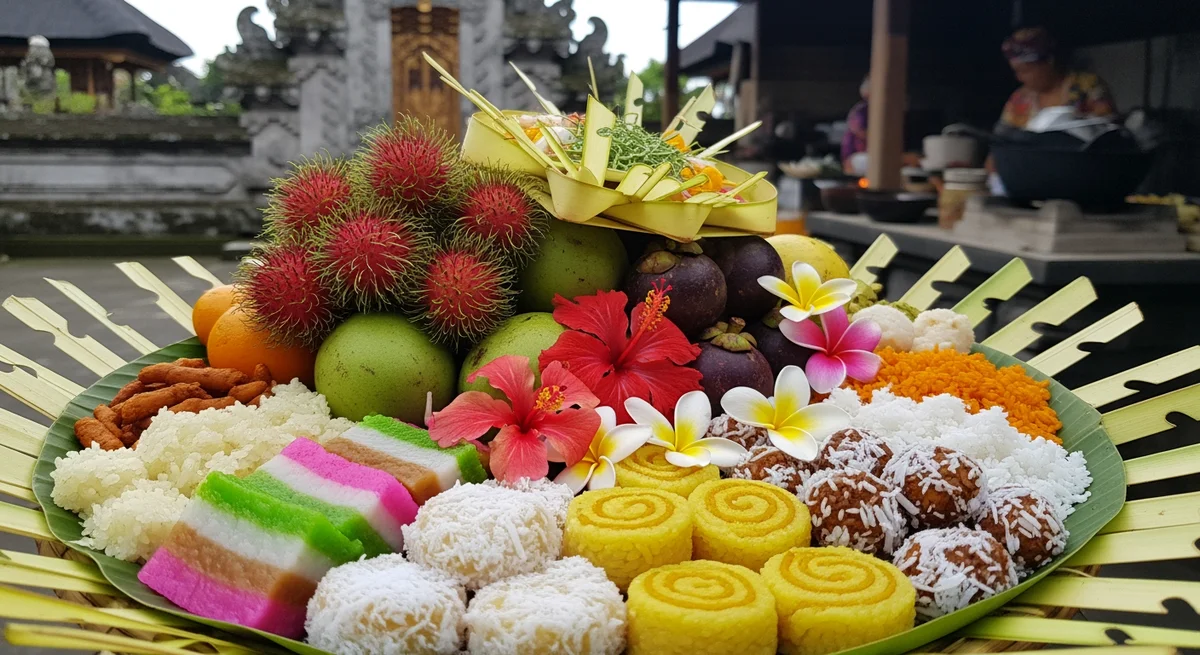
At the core of Balinese spiritual life are banten, the intricate offerings presented daily and during ceremonies. These aren't just decorative; they are carefully constructed arrangements of food, flowers, and natural elements, each component carrying symbolic weight.
- Canang Sari: The ubiquitous daily offering, a small basket woven from palm leaves, filled with a diverse array of items: a pinch of cooked rice, vibrant flowers representing different deities and directions, betel quid, shredded coconut, and sometimes a small cookie or sweet. These simple yet profound offerings are placed everywhere – on altars, at crossroads, even on scooter dashboards – as a gesture of gratitude and to appease spirits.
- Elaborate Banten: For larger ceremonies,
bantencan become monumental, towering structures laden with a vast array of fruits, traditional cakes (jajan), roasted meats (likeayam betutuorbabi gulingfor feasts, not direct offerings to gods), and intricately shaped rice pastries. These are works of art, meticulously prepared by women, signifying the collective devotion of the community.
Key Ingredients and Preparations: The Soul of Balinese Cooking
The spiritual essence of Balinese food begins with its foundational elements:
- Base Genep (The Universal Spice Paste): This fragrant blend of shallots, garlic, ginger, turmeric, galangal, kencur, chili, and various spices is the heart and soul of almost every Balinese dish. The act of grinding these ingredients by hand is often a meditative, communal process, infusing the paste with intention and prayer.
- Rice: As the staple food, rice is sacred. It's often dyed vibrant colors for offerings and ceremonies, symbolizing different aspects of the universe and divine energy.
- Coconut: From its oil used in cooking to its milk in sauces and its shredded flesh in offerings and dishes like
lawar, the coconut tree is revered as the 'tree of life'.
Dishes prepared for ceremonial feasts, even if not direct offerings to the gods, are still imbued with sacred meaning through their preparation and shared consumption. Lawar (a mixed vegetable and meat salad) and Sate Lilit (minced meat skewers) are prime examples of complex, communal dishes central to Balinese celebrations.
The Act of Cooking: A Meditative Practice
For Balinese women, the preparation of food for offerings and feasts is not a chore but a sacred duty, a form of yadnya (selfless ritual action). It's a time for quiet reflection, prayer, and connecting with the divine. The kitchen becomes a temple, and every ingredient handled is an act of devotion, ensuring that the food carries positive energy for those who partake in it.
Conclusion: A Culinary Tapestry of Devotion
From the simplest daily canang sari to the most extravagant ceremonial feasts, food in Bali transcends mere sustenance. It is a conduit for spiritual connection, a testament to gratitude, and a vibrant expression of Tri Hita Karana – the philosophy emphasizing harmony with God, fellow humans, and nature. To truly understand Balinese culture is to embark on the sacred journey of its cuisine, where every bite tells a story of devotion and interconnectedness.