
The Gaúcho Secret: What Darwin Learned About Meat, Health, and Perfect Smiles

When Darwin Met the Gaúchos: A Biological Marvel in the Pampas
Imagine sailing the world, charting new species, and then stumbling upon a human population so robust, so vibrant, that it challenges everything you thought you knew about health and diet. That's precisely what happened to Charles Darwin in the 1830s during his epic voyage on the HMS Beagle.
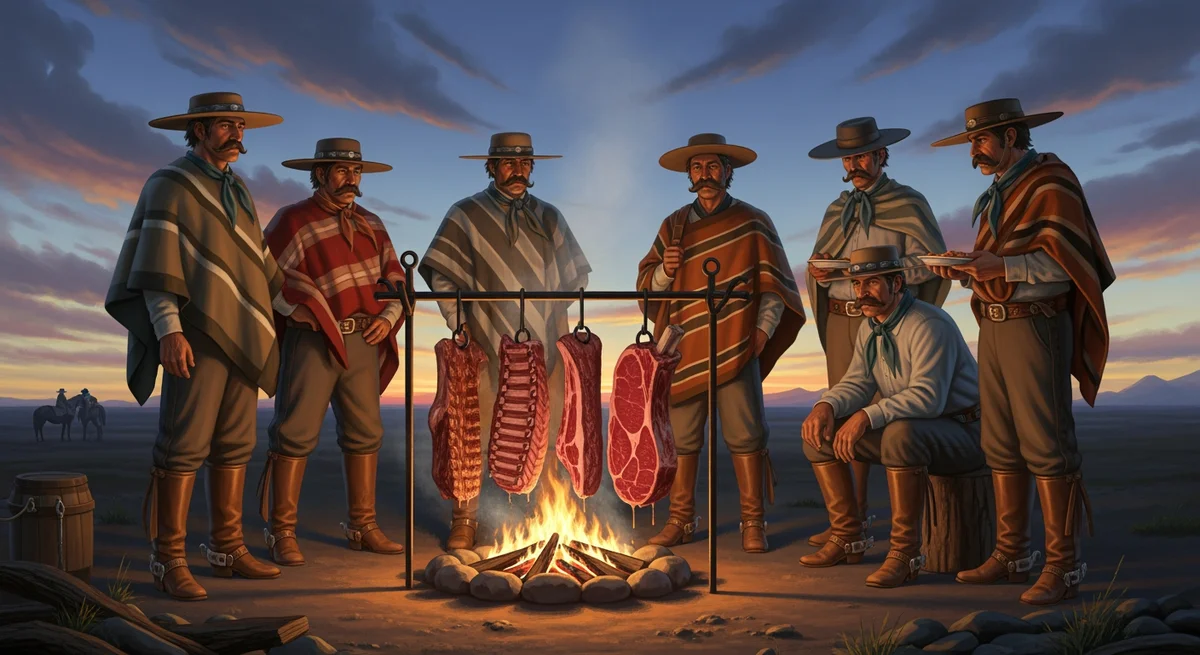
As he traversed the seemingly endless pampas of South America, a vast grassland stretching across Argentina, Uruguay, and Brazil, Darwin became utterly captivated by the local inhabitants: the Gaúchos. These legendary horsemen, skilled ranchers, and masters of the open plains struck the young English naturalist as a biological marvel – individuals radiating strength, endurance, and an almost unbelievable state of health.
The Rugged Life of the Gaúcho: A Constant Test of Endurance
To understand the Gaúcho's vitality, we first need to appreciate their lifestyle. These were not sedentary individuals; their lives were a constant ballet of physical exertion. From dawn till dusk, they were in the saddle, herding cattle across immense distances, breaking wild horses, and living largely outdoors, exposed to the elements – scorching sun, biting winds, and sudden storms.
This isn't a life that tolerates weakness. Survival in the pampas demanded peak physical condition, unwavering stamina, and mental fortitude. It's in this crucible of natural selection that Darwin observed the Gaúchos thriving, seemingly immune to the common ailments that plagued more 'civilized' populations.
The Carnivore's Feast: Simple, Potent, and Pure
The most intriguing aspect of the Gaúcho diet was its radical simplicity and overwhelming reliance on meat. Darwin noted with astonishment that these horsemen consumed vast quantities of beef, often several pounds a day, with little to no vegetables, fruits, or grains. Their meals were primal: freshly slaughtered cattle, cooked over an open fire – the famous asado – seasoned perhaps with a little salt. This wasn't just a preference; it was the foundation of their very existence in a landscape where arable farming was limited, and game plentiful.
Darwin meticulously documented their perfect teeth, strong bones, and robust physiques. He observed a remarkable absence of dental decay, rickets, and many of the degenerative diseases common in European societies of his time. The Gaúchos seemed to possess an innate resilience, a testament, he surmised, to their active lifestyle combined with this highly carnivorous diet. They were living proof that a diet rich in animal protein and fat, often shunned by conventional wisdom, could foster extraordinary health and vitality.
A Modern Reflection: The Gaúcho Diet and Ancestral Wisdom
While we don't advocate for an exclusive meat-only diet for everyone today, Darwin's observations of the Gaúchos offer profound insights that resonate with contemporary discussions around ancestral health and nutrient-dense eating. Their diet, rich in muscle meat, organ meats (though perhaps less explicitly observed by Darwin, common in traditional cultures), and animal fats, provided essential amino acids, vitamins (especially fat-soluble A, D, E, K2), and minerals in highly bioavailable forms. The lack of processed foods, refined sugars, and inflammatory vegetable oils in their diet is also a crucial factor often overlooked.
What Darwin witnessed was a population perfectly adapted to its environment, thriving on the sustenance readily available to them. The Gaúcho secret wasn't a complex superfood regimen or a restrictive calorie count; it was a synergy of a demanding lifestyle and a simple, whole-food diet, deeply rooted in their landscape. Their perfect smiles and tireless energy serve as a historical mirror, prompting us to re-examine our own dietary paradigms and the fundamental building blocks of human health. Perhaps there's more wisdom in the pampas than we've given credit for.