
The Balinese Warung: Where Community Meets Cuisine – An Insider's Guide

Introduction
If you want to eat the best food in Bali, skip the resort restaurants and find a warung. A warung is a small, family-run eatery — sometimes just a few plastic tables and chairs under a corrugated tin roof, sometimes a simple open-air kitchen facing the street. Warungs are the heart and soul of Balinese food culture, and every neighborhood, village, and alley in Bali has at least one.
What Exactly is a Warung?
The term 'warung' itself is Indonesian for a small, family-owned business, but in Bali, it almost always refers to a food stall or restaurant. They come in many forms: a humble shack by the roadside, a bustling corner shop in a town, or even a more permanent structure with a few indoor tables. What unites them is their authenticity, their local focus, and the delicious, often hyper-local, food they serve.
Forget fancy décor or white tablecloths; warungs are about the food, the people, and the vibrant atmosphere. The sounds of clattering woks, the aroma of spices, and the chatter of locals are all part of the experience. It’s a sensory feast before you even take your first bite.
The Art of Nasi Campur
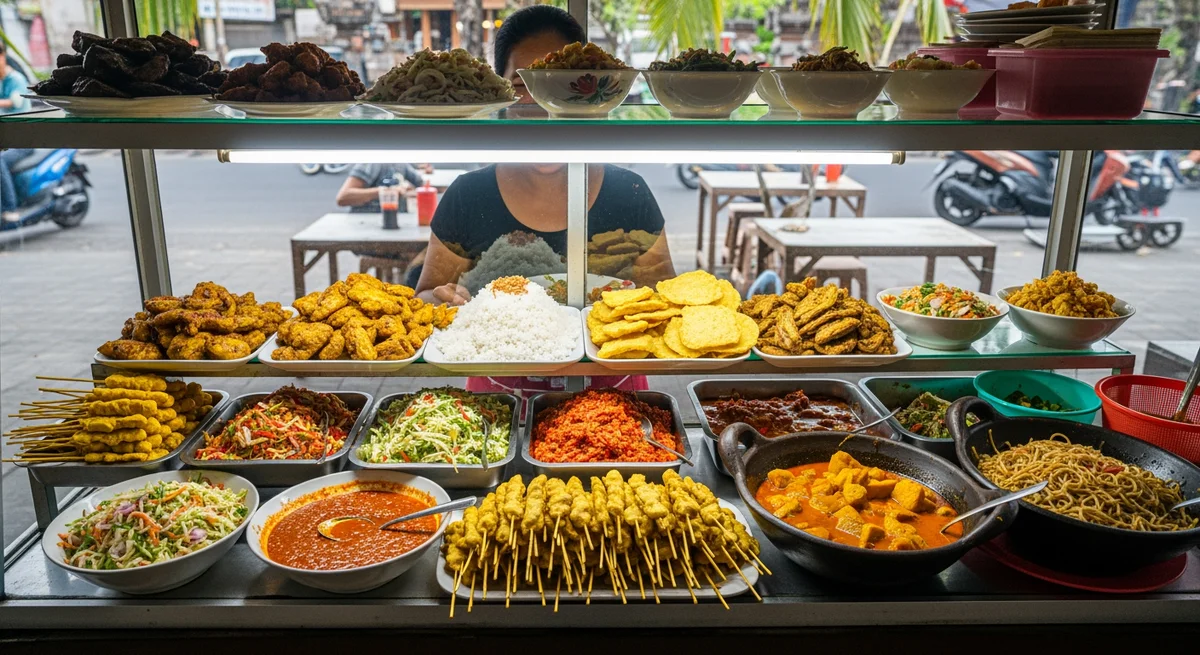
A typical Balinese warung operates on the nasi campur model. The owner — almost always a woman, known as Ibu (mother) — wakes before dawn to prepare a dozen different dishes. By mid-morning, her glass display case is filled with small trays of vibrant curries, stir-fries, grilled meats, sambal varieties, vegetables, krupuk (crispy crackers), and a massive pot of perfectly steamed rice.
Customers point at what they want, and Ibu assembles a personalized nasi campur plate in seconds, her hands moving with the speed and precision of decades of practice. It's a culinary ballet, a dance of flavors and textures, all chosen by you. The beauty is that every plate is unique, a reflection of your cravings and Ibu's daily creations.
Tip: Don't be shy! Pointing is perfectly acceptable. If you're unsure, just say 'semua' (everything) or 'campur' (mixed) and let Ibu create a classic plate for you.
What makes warung food special is consistency through imperfection. Every warung's nasi campur tastes different because every Ibu has her own base genep (Balinese spice paste) recipe, her own sambal matah proportions, her own lawar style. Regulars are fiercely loyal to their warung — "my warung" is a phrase every Balinese person uses with pride. Finding a warung you love is a personal relationship, not just a dining choice.
Beyond Rice: Iconic Warung Dishes
While nasi campur is the star, the individual components are what truly shine. Here are a few must-try dishes you'll often find in a warung, each a testament to Bali's rich culinary heritage:
Ayam Sisit (Shredded Chicken with Spices)
This dish is a staple of Balinese cuisine, a flavorful explosion of shredded chicken mixed with a spicy and aromatic paste. It's often served cold or at room temperature, making it a refreshing addition to a hot nasi campur plate.

Sate Lilit (Minced Seafood/Chicken Sate)
Unlike traditional satay skewers, Sate Lilit features minced fish (often mackerel) or chicken, mixed with grated coconut, rich Balinese spices, and then wrapped around lemongrass or bamboo sticks before grilling. The result is incredibly juicy and fragrant.

Lawar (Mixed Vegetable & Meat Salad)
Lawar is a traditional Balinese salad, a complex and beautiful blend of finely chopped vegetables, grated coconut, minced meat (pork or chicken are common), and a potent mix of spices. There are many variations, from Lawar Merah (red lawar) which includes fresh blood for richness, to Lawar Putih (white lawar) which is lighter. It's a testament to Balinese culinary ingenuity.

You'll also frequently find dishes like:
- Tum: Steamed parcels of minced meat (often pork or chicken) with spices, wrapped in banana leaves.
- Sambal Matah: A raw shallot and lemongrass sambal, vibrant and fresh.
- Various stir-fried vegetables (sayur).
- And, of course, plenty of Krupuk to add a delightful crunch to every bite.
More Than Just Food: A Social Lifeline
Prices at a warung are remarkably affordable — a full nasi campur plate might cost 15,000–25,000 Indonesian Rupiah (about $1–1.50 USD). This accessibility is intentional. Warungs exist to feed the community, not to maximize profit. Many warungs have been in the same family for three generations, with recipes and customers inherited along with the kitchen.
The warung is also a social hub. Neighbors catch up over morning coffee. Workers grab a quick nasi jinggo (a small, portable nasi campur) on their lunch break. Families celebrate small occasions with a warung feast. In Bali, the warung is not just where you eat — it is where you belong. It's where stories are shared, news is exchanged, and the rhythm of daily life unfolds.
Finding Your Own 'My Warung'
For visitors, finding a great warung can be an adventure. Here are a few tips:
- Look for the Crowds: A warung packed with locals, especially during lunch hours (
12 PM - 2 PM), is usually a good sign of quality and freshness. - Observe Hygiene: While a warung won't be pristine, look for clean display cases, fresh-looking ingredients, and staff who handle food hygienically.
- Ask Locals: Don't hesitate to ask your hotel staff, taxi driver, or new Balinese friends for their personal recommendations. Everyone has a favorite!
- Go Early: For the freshest selection, try to visit a warung closer to opening hours, usually
9 AM - 11 AM. - Don't Judge a Book by Its Cover: The most unassuming warungs often hide the most incredible culinary treasures.
Warung Etiquette: Eating with Respect
While warungs are casual, a few points of etiquette can enhance your experience:
- Eat with your Right Hand: If you're eating without cutlery (which is common and encouraged!), always use your right hand. The left hand is considered unclean in Balinese culture.
- Be Patient: During peak hours, service might be a little slower, but it's all part of the laid-back Balinese pace.
- Smile and Be Friendly: A warm smile and a few words of Indonesian (like 'terima kasih' for thank you) go a long way.
- Don't Waste Food: Take only what you can eat, or ask for a smaller portion if available.
Conclusion
The Balinese warung offers far more than just a meal; it's an immersion into the island's authentic culture, a taste of its generous spirit, and a direct connection to its people. So, next time you're in Bali, step away from the polished resorts and seek out a warung. You might just find your new favorite dish, a friendly conversation, and a deeper appreciation for the simple, profound joy of Balinese cuisine. Selamat makan! (Happy eating!)