
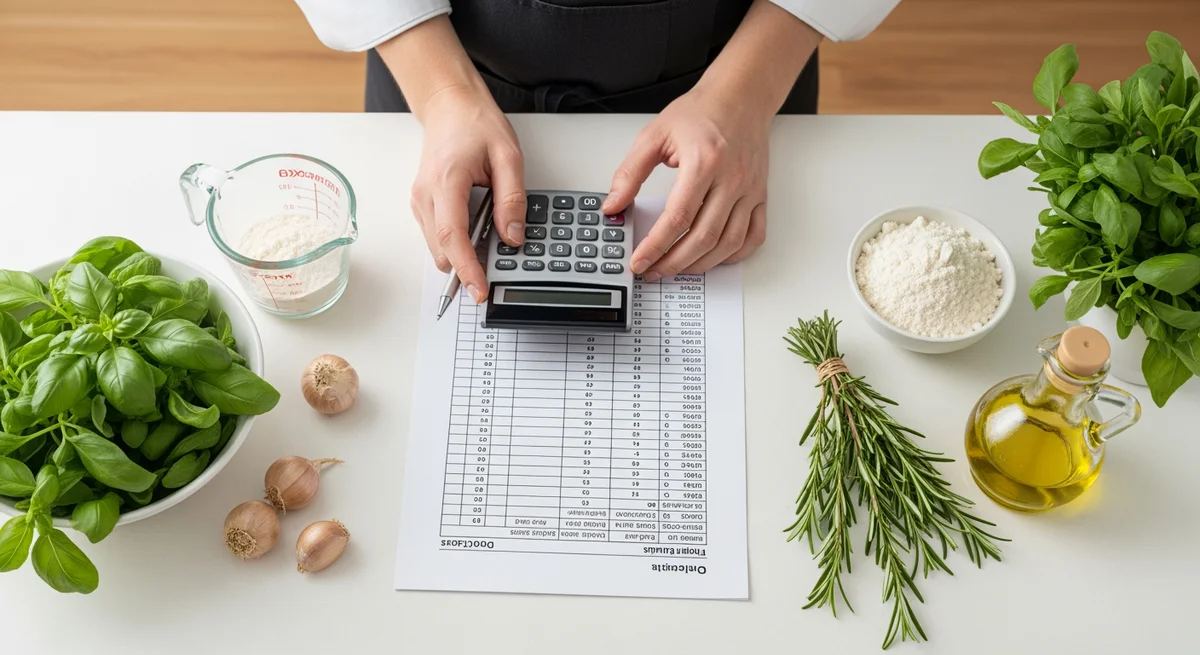
Recipe Costing 101: The Unspoken Truth of Culinary Business

Introduction: Where Passion Meets the Spreadsheet
Cooking is, without a doubt, a creative art form. It's about passion, flavor, and the joy of feeding people. But if you're even thinking about turning that passion into a business, there's another side you absolutely can't ignore: the numbers.
Recipe costing is something many of us learn in culinary business studies, and it's truly a game-changer for how you view food. It's not just about how good a dish tastes anymore; it's also about how much it actually costs to make. This knowledge is your superpower for building a sustainable, profitable culinary venture.
The Core Concept: What's Really in Your Pot (and Wallet)?
The basic idea of recipe costing seems simple enough: calculate every ingredient, break it down into cost per portion, and then determine your selling price from there. But the real magic (and challenge) lies in the details. It's about looking at your entire operation through a financial lens, considering everything from waste to consistency.
Step 1: Ingredient Breakdown – Beyond the Shopping List
This is where it all starts. You need to know the exact cost of every single ingredient that goes into a dish. Don't just look at the price of a bag of flour; consider the cost per gram or ounce. Here’s how you can approach it:
- Purchase Price: Record the actual price you paid for each ingredient.
- Unit of Measure: Note the unit you bought it in (e.g.,
5 lb bagof flour,1 dozeneggs,1 pintcream). - Recipe Unit: Determine how much of that ingredient your recipe actually uses (e.g.,
1 cupflour,2 largeeggs,1/2 cupcream). - Cost Per Recipe Unit: Calculate the cost of the specific amount used in your recipe. This might involve converting units (e.g.,
5 lbflour =80 oz. If5 lbcosts$4.00, then1 ozcosts$0.05. If your recipe uses4 ozor1/2 cup, that's$0.20for flour).
Pro Tip: Keep a master spreadsheet or use dedicated software. Update ingredient prices regularly, as they fluctuate. A small change in flour or butter price can significantly impact your overall cost if you're baking in volume.
Step 2: Summing It Up – Your Raw Food Cost
Once you've calculated the cost for each individual ingredient in your recipe, add them all up. This total is your raw food cost for one batch of the recipe. If your recipe makes 10 servings, divide the raw food cost by 10 to get the raw food cost per portion.
This number is your foundation. It tells you the absolute minimum you need to spend just on ingredients to produce one serving of your dish.
Beyond the Bowl: Hidden Costs You Can't Ignore
One of the biggest mistakes I see, especially when people are just starting out, is underpricing. It’s easy to focus only on ingredient costs, but your time, effort, and skills matter too. And those aren't the only hidden costs. Let's dig into what else you need to factor in:
1. Waste Not, Want Not: Factoring Spoilage & Trim
Not every gram of that 5 lb bag of potatoes will make it into your mashed potato recipe. You'll peel them, trim imperfections, and inevitably, there might be some spoilage. This is called yield loss or shrinkage.
- Trim: How much of a whole ingredient is unusable (e.g., onion skins, carrot tops, bones from chicken).
- Spoilage: Ingredients that go bad before you can use them.
- Over-portioning: Accidentally using more than the recipe calls for.
- Oops Factor: Mistakes, dropped food, burnt batches.
Actionable Advice: Be realistic about your yield. If a
10 lbbag of carrots only yields8 lbof peeled, usable product, you need to factor in that20%loss when calculating the effective cost per pound of usable carrots.
2. The Value of Your Time: Labor Costs
Your time is money. Whether you're paying an employee or paying yourself, the hours spent prepping, cooking, cleaning, and packing all have a cost. Don't just work for free!
- Direct Labor: The time spent directly making the food (chopping, mixing, cooking).
- Indirect Labor: Time spent on ordering, cleaning, dishwashing, administrative tasks, marketing, customer service.
3. Overhead: Keeping the Lights On (and More)
These are the ongoing costs of doing business that aren't directly tied to a specific recipe but are essential for your operation.
- Rent/Utilities: For your kitchen space.
- Equipment Depreciation: Your oven, mixer, and knives don't last forever. Factor in their eventual replacement.
- Packaging: Boxes, containers, labels, bags.
- Marketing & Sales: Website costs, social media ads, farmers market fees.
- Insurance & Licenses: Necessary for legal operation.
- Delivery/Transportation: Getting your food to customers.
Calculating Your Price: Finding the Sweet Spot
Once you have a clear picture of your raw food cost plus all those hidden costs, you can start to determine a selling price that ensures profitability.
The Food Cost Percentage (FCP)
This is a critical metric in the food industry. It's the raw food cost of an item divided by its selling price, expressed as a percentage. Most businesses aim for an FCP between 20-35%.
- Formula:
(Raw Food Cost / Selling Price) x 100 = Food Cost Percentage - To find selling price based on desired FCP:
Raw Food Cost / Desired FCP (as a decimal)
Example: If your raw food cost for a slice of cake is
$1.50, and you want a30%FCP, your selling price would be$1.50 / 0.30 = $5.00.
Remember, this 30% FCP needs to cover all your other costs (labor, overhead, profit margin). If your overhead is high, you might need a lower FCP for food to ensure overall profitability.
Markup vs. Margin
These terms are often confused but are distinct:
- Markup: The amount added to your cost to get your selling price. If an item costs
$1.00and you sell it for$2.00, your markup is$1.00or100%. - Margin (or Profit Margin): The profit you make as a percentage of your selling price. If an item sells for
$2.00and your cost (all costs) is$1.00, your profit is$1.00. Your profit margin is($1.00 / $2.00) x 100 = 50%.
Understanding both helps you set competitive and profitable prices.
Consistency is Key: Quality, Reputation, and Your Bottom Line
Recipe costing isn't just about initial calculations; it's also about consistency. If your portions are inconsistent, or your ingredients vary in quality or quantity from batch to batch, it directly impacts your costs and your reputation.
- Over-portioning: Leads to higher food costs and lower profits.
- Under-portioning: Leads to unhappy customers and potential loss of business.
- Inconsistent quality: Can damage your brand and lead to waste if products are rejected.
Solution: Standardized recipes are your best friend. Detailed measurements, clear instructions, and even photos ensure that every cook makes the dish the same way, every time. This helps control costs and maintain quality.
From Passion to Profit: Sustainable Culinary Entrepreneurship
Through my experience as a recipe developer, I’ve learned that a good recipe should work both in the kitchen and on paper. Because at the end of the day, sustainability matters just as much as creativity.
Ignoring costing can lead to burnout, financial stress, and ultimately, the failure of a business built on passion. Embracing costing, however, empowers you to make informed decisions, understand your value, and build a resilient business that thrives.
Practical Steps to Get Started
Feeling overwhelmed? Don't be! Start small:
- Pick One Recipe: Choose one of your most popular or frequently made items and do a full cost breakdown for it first.
- Track Everything: For a week, meticulously record all purchases for your business. Don't forget small things like cleaning supplies or paper towels.
- Time Yourself: Use a stopwatch to accurately time how long it takes to prep and cook that one chosen recipe. Include cleanup!
- Research Competitors: See what similar businesses are charging for comparable items. This gives you a market benchmark.
- Build a Spreadsheet: Start a simple spreadsheet with columns for Ingredient, Unit of Purchase, Price, Quantity Used in Recipe, Cost Per Recipe Unit, and Total.
Conclusion: Cooking Smarter, Not Just Harder
Recipe costing might not be as glamorous as creating a new dish, but it's the backbone of any successful culinary business. It transforms your cooking from a hobby into a strategic venture. By understanding your numbers, you're not stifling your creativity; you're safeguarding it, ensuring that your passion can continue to flourish and feed not just bellies, but also your bottom line. So, grab your calculator – it's time to cook smarter!