
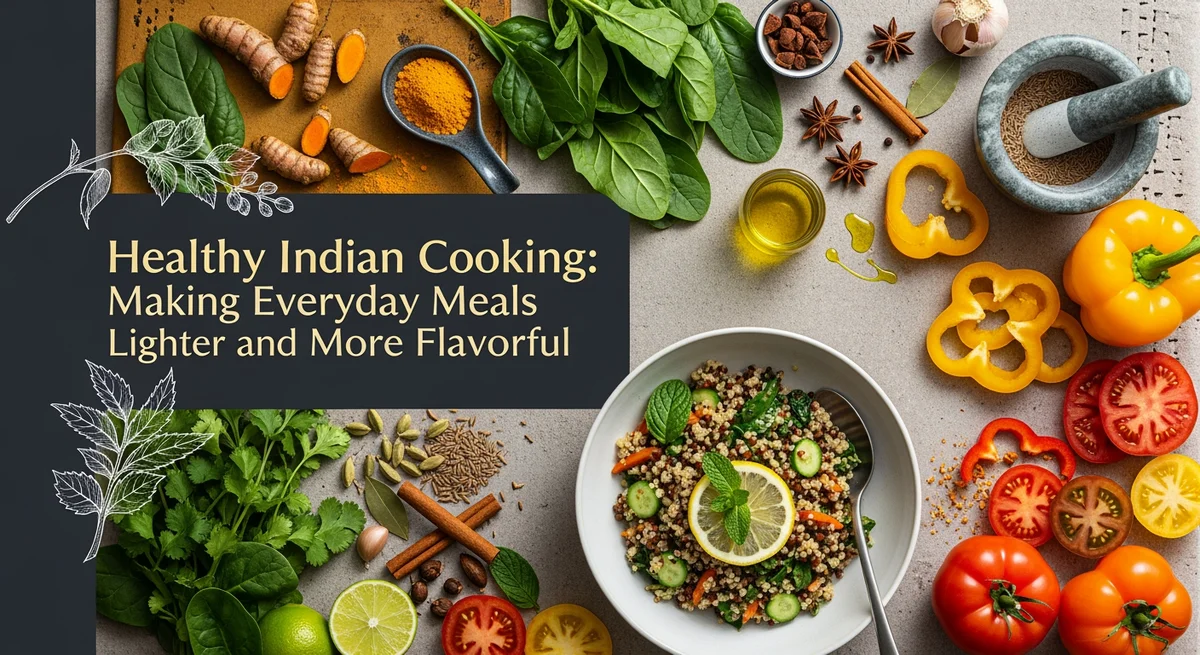
Healthy Indian Cooking: Making Everyday Meals Lighter and More Flavorful

Savoring the Spice: Indian Food, Reimagined for Health
Indian cuisine is a symphony of flavors, aromas, and textures that has captivated palates worldwide. From the rich, creamy curries to the delicate balance of spices in a simple dal, it's a culinary experience like no other. But let's be honest, traditional Indian cooking can sometimes feel a bit heavy for everyday meals, often relying on generous amounts of oil, ghee, and rich creams.
What if we told you that you don't have to sacrifice flavor to make your favorite Indian dishes healthier? It's absolutely possible to enjoy the vibrant tastes of India while making smart, wholesome choices that benefit your well-being. This guide is all about embracing the core principles of Indian cooking – fresh ingredients, aromatic spices, and diverse plant-based options – and tweaking them for a lighter, more nourishing approach without losing an ounce of deliciousness.
The Building Blocks: What Makes Indian Food Unique?
Before we dive into making things lighter, let's quickly appreciate what makes Indian food so special. It's a cuisine built on:
- Aromatic Spices: Turmeric, cumin, coriander, cardamom, cloves, cinnamon, and chili are not just flavor enhancers; many have incredible health benefits.
- Diverse Legumes (Dals): Lentils, chickpeas, and beans form the backbone of many meals, providing protein and fiber.
- Fresh Vegetables: A kaleidoscope of seasonal vegetables is integral to curries, stir-fries, and sides.
- Grains: Rice and various flatbreads (roti, naan) are staple accompaniments.
- Healthy Fats: While sometimes used in excess, traditional fats like ghee (clarified butter) offer distinct flavors and nutrients in moderation.
Our goal isn't to strip away these elements but to use them mindfully and make conscious swaps.
Smart Strategies for Lighter Indian Cooking
Ready to transform your Indian kitchen into a haven of healthy, flavorful meals? Here are some actionable tips:
1. Master the Art of Oil and Ghee Reduction
This is perhaps the biggest game-changer. Many Indian recipes call for significant amounts of oil or ghee for tempering (tadka) and sautéing. You can drastically reduce this without compromising flavor.
- Use Non-Stick Pans: A good quality non-stick pan allows you to sauté spices and aromatics with just
1-2 teaspoonsof oil instead of tablespoons. - Water or Broth Sautéing: Start by heating a pan, add a splash of water or vegetable broth, then add your spices and aromatics (onions, ginger, garlic). As the liquid evaporates, the ingredients will soften and release their flavors. Add more liquid as needed.
- Measure Carefully: Don't eyeball it! Use measuring spoons to control oil quantities.
Pro Tip: For tempering, try dry-roasting whole spices briefly before adding a tiny bit of oil. The heat brings out their flavor, and less oil is needed for the final sizzle.
2. Embrace the Power of Vegetables (More is More!)
Indian cuisine already celebrates vegetables, but we can take it a step further. Load up your curries, dals, and stir-fries with even more seasonal produce.
- Bulk Up Curries: Add extra spinach to a palak paneer, more cauliflower to an aloo gobi, or throw in some zucchini, bell peppers, or green beans to almost any curry base.
- Vegetable-Forward Dals: While dal is healthy, adding finely chopped carrots, peas, or spinach to your lentil preparation boosts nutrients and fiber.
- Rethink Sides: Instead of just a small side of sabzi (dry vegetable dish), make it a larger, more prominent part of your meal.
3. Leaner Protein Choices
While butter chicken and lamb curries are delicious, making leaner protein choices for everyday cooking can significantly reduce calorie and fat intake.
- Chicken and Fish: Opt for skinless chicken breast or fish (like tilapia, cod, salmon) in your curries. They cook quickly and absorb flavors beautifully.
- Legumes as Stars: Dals, chickpeas (chana masala), and kidney beans (rajma) are fantastic plant-based protein sources, rich in fiber and naturally low in fat.
- Paneer in Moderation: Paneer (Indian cheese) is a good source of protein but is also high in fat. Use it sparingly or choose low-fat paneer options. Tofu can be a great substitute for paneer in many dishes.
4. Smart Dairy and Cream Swaps
Many classic Indian dishes achieve their richness through heavy cream, yogurt, or full-fat milk. Here's how to lighten them up:
- Low-Fat Yogurt: Use low-fat plain yogurt for raitas, marinades, and to thicken curries. Just be careful not to add it to very hot curries, or it might curdle (temper it first).
- Coconut Milk: While still caloric, light coconut milk can be a good alternative to heavy cream in some curries, especially South Indian ones, offering a different flavor profile.
- Pureed Vegetables/Nuts: For creamy texture without the dairy, blend cooked cashews (sparingly, as they're high in fat), almonds, or even pureed roasted vegetables like zucchini or cauliflower into your curry base.
5. Rethink Your Grains and Carbs
White rice and naan are delicious, but switching to whole grains can boost fiber and nutrients.
- Brown Rice/Millets: Swap white rice for brown rice, quinoa, or millets (like foxtail or barnyard millet) for a healthier carb option.
- Whole Wheat Roti/Chapati: Stick to homemade whole wheat rotis or chapatis instead of oil-laden parathas or refined flour naans.
- Portion Control: Even with healthy carbs, portion control is key. A small bowl of rice or
1-2rotis is usually sufficient.
6. The Magic of Spices (Naturally Healthy!)
Indian spices are inherently healthy, packed with antioxidants and anti-inflammatory properties. Don't be shy with them! They add immense flavor, reducing the need for excess salt, sugar, or fat.
- Fresh Herbs: Cilantro, mint, and curry leaves add a burst of freshness and flavor.
- Aromatics: Ginger, garlic, and green chilies are powerhouse flavor enhancers.
- Citrus: A squeeze of fresh lemon or lime juice at the end of cooking brightens flavors without adding calories.
7. Oven Bake, Air Fry, or Shallow Fry Instead of Deep Fry
Deep-fried snacks like samosas, pakoras, and pooris are undeniably tempting. For healthier versions:
- Bake or Air Fry: Many snacks can be baked or air-fried to a crispy perfection with minimal oil. Try baked samosas, air-fried pakoras, or even oven-roasted lentil patties.
- Shallow Frying: If frying is a must, opt for shallow frying with a minimal amount of healthy oil like avocado oil or mustard oil.
Putting It All Together: Lighter Meal Ideas
With these tips in mind, here are some ideas for lighter Indian meals:
- Vegetable-Loaded Dal: A simple dal tadka or dal palak (lentils with spinach) made with minimal oil and packed with extra veggies, served with brown rice and a side salad.
- Lean Chicken/Fish Curry: A coconut-based fish curry or a tomato-based chicken curry with lots of bell peppers, onions, and spinach, accompanied by whole wheat rotis.
- Healthy Pulao/Biryani: Instead of rich biryanis, opt for a vegetable pulao using brown basmati rice, loaded with carrots, peas, green beans, and cauliflower.
- Chickpea Salad: A tangy chana chaat (chickpea salad) with fresh veggies, herbs, and a light dressing makes a satisfying and healthy snack or light meal.
The Journey to Healthier Indian Cooking
Making your everyday Indian meals healthier isn't about bland, restrictive eating. It's about smart substitutions, mindful cooking techniques, and celebrating the incredible natural flavors and nutritional benefits already present in this rich cuisine. Experiment with these tips, find what works for you, and enjoy the journey to delicious, wholesome Indian food, everyday!
Your palate (and your body) will thank you for it. Happy cooking!