
Chimarrão: The Liquid Soul of Gaúcho Culture and the Art of Sharing

More Than a Drink: The Heart of Gaúcho Sociability
In the vast, rolling pampas of Southern Brazil, where the horizons stretch endlessly and the spirit of the gaúcho runs deep, there's a ritual more sacred than any meal: the Chimarrão. It's not just a hot, bitter infusion of yerba mate; it's a profound symbol of identity, connection, and the very heartbeat of a vibrant social fabric.
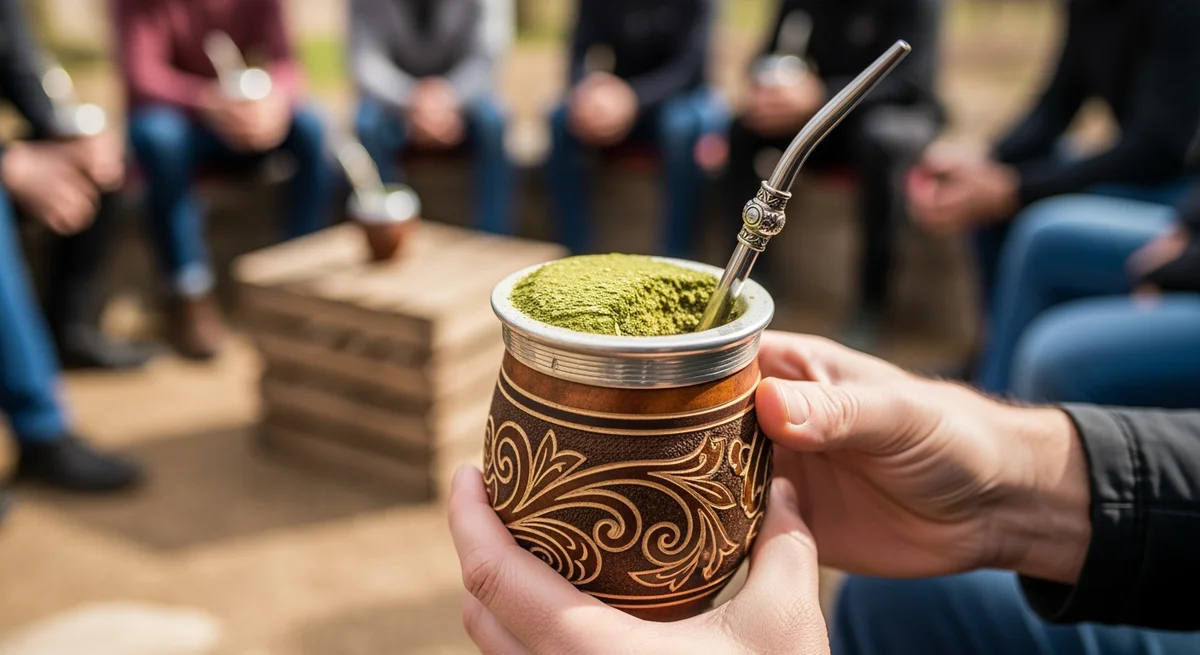
Imagine a circle of friends, family, or even strangers, gathered together. A cured gourd, called a cuia, is passed from hand to hand, each person taking a sip through the same silver straw, or bomba. This isn't just about quenching thirst; it's about sharing a moment, building trust, and reinforcing the deep bonds of community. It's an invitation into the Gaúcho soul, one warm, earthy sip at a time.
What Exactly is Chimarrão?
Before we dive into the ritual, let's understand the components that make up this unique beverage:
- Yerba Mate: This isn't your average tea leaf. Yerba mate comes from the Ilex paraguariensis plant, a native South American holly. The leaves and tender stems are harvested, dried, and often toasted, then finely ground into a vibrant green, almost powdery consistency. It’s known for its stimulating properties, often described as a sustained, gentle energy boost without the jitters of coffee, thanks to compounds like mateine (a cousin to caffeine), theobromine, and theophylline.
- The Cuia (Gourd): The traditional vessel for Chimarrão is a cuia, typically made from a hollowed-out squash gourd. Each cuia is unique, often beautifully carved or adorned, and it needs to be 'cured' before use to enhance its flavor and durability. Holding a warm cuia in your hands is an integral part of the experience – it's comforting, grounding, and deeply personal.
- The Bomba (Straw): This isn't just any straw. The bomba is usually made of metal (often stainless steel, nickel silver, or even pure silver) and has a flattened, spoon-like filter at one end. This filter is crucial, as it prevents the fine yerba mate leaves from being ingested while allowing the liquid to pass through smoothly.
- Hot Water: Crucially, the water must be hot, but never boiling. The ideal temperature is typically between
70-80°C (158-176°F). Boiling water will 'burn' the yerba, making it excessively bitter and depleting its flavor too quickly.
The Heart of the Matter: The Roda de Mate
The true essence of Chimarrão isn't in the drink itself, but in the "Roda de Mate" (the mate circle). Unlike coffee or tea, which are often consumed individually, the Chimarrão is designed to be shared. There's a beautiful, almost silent, democratic etiquette to this ritual:
- The Patrão (Server): One person, often the host, acts as the patrão or preparer. They are responsible for setting up the mate, serving the first few sips, and refilling the cuia with hot water each time it's passed back to them.
- The Cycle: The patrão prepares the cuia, takes the first sip (often to ensure it's ready and to 'test' the bitterness), and then passes it to the person on their right (or left, depending on local custom). That person drinks until the cuia is empty (you'll hear a characteristic sucking sound), then hands it back to the patrão.
- Refill and Pass: The patrão then refills the cuia with hot water and passes it to the next person in the circle. The cuia continues to circulate in this manner, always returning to the patrão for a refill before moving to the next person.
- Shared Bomba: Everyone drinks from the same bomba. This is a powerful gesture that erases social hierarchies, reinforces a sense of communal trust, and symbolizes deep connection. In this circle, everyone is equal.
- No Rushing: The mate is passed in turn. You don't rush the person drinking; you wait patiently. It's a rhythm of listening, contemplation, and presence.
Tip: If you've had enough, simply say "Obrigado" (thank you) when returning the cuia to the patrão. This signals that you're done, and they won't offer it to you again until a new round begins, or you ask for it.
The Patrão's Art: Preparing the Perfect Chimarrão
Being the patrão is a role of honor and responsibility. Here’s a simplified guide to preparing the Chimarrão:
- Fill the Cuia: Fill your cuia about two-thirds full with the yerba mate. You might need to gently shake it to settle the finer particles.
- Create the 'Mountain': Tilt the cuia on its side, gently tapping it to create a 'mountain' or 'wall' of yerba on one side, leaving a clear space on the other.
- Wake the Mate: In the empty space, pour a small amount of cold or lukewarm water. Let it sit for a minute or two. This helps to 'wake up' the yerba, preventing the hot water from burning it and extending its flavor.
- Insert the Bomba: Carefully insert the bomba into the wet yerba, pushing it firmly against the bottom of the cuia, under the 'mountain' of dry yerba. Be gentle – once the bomba is in, try not to move it.
- First Hot Water: Pour hot (not boiling!) water into the empty space next to the bomba. Don't flood the entire cuia with water; try to keep the 'mountain' of dry yerba intact. This dry yerba will gradually get wet with each refill, releasing fresh flavor over time.
- Enjoy and Share: The first few sips might be quite strong and bitter. The patrão often takes these to ensure the mate is well-prepared. Then, the ritual begins: sip, empty, return, refill, pass.
Slow Living and Deep Connections
Beyond the physical act of sharing, the Chimarrão is a catalyst for reflection and "slow living." It dictates the rhythm of conversation. You cannot rush a mate; you must wait your turn, listen while others speak, and enjoy the warmth of the gourd in your hands. It’s the "social lubricant" of the South, present in everything from serious political debates to the quietest moments of family reconciliation.
The act of sharing a Chimarrão fosters an environment of active listening and presence. There are natural pauses as the cuia circulates, allowing for contemplation and thoughtful responses. It's a beautiful counterpoint to our fast-paced, often distracted modern world.
A Companion for Solitude
For the Gaúcho, the Chimarrão is also a cherished companion for solitude. In the silence of the early morning, as the sun rises over the pampas, it serves as a moment of introspective prayer and a deep connection to the land. Whether shared among friends or enjoyed alone facing the horizon, it represents a pause in a frantic world—a reminder that hospitality and human connection are the most valuable currencies we have.
Experience the Gaúcho Spirit
If you ever have the chance to be invited into a Roda de Mate, embrace it. It’s an honor, an education, and a truly authentic cultural experience. If you’re curious to try it at home, look for yerba mate, cuias, and bombas at specialty South American markets. Be prepared for an acquired taste – it's earthy, grassy, and bitter – but also for a uniquely invigorating and communal experience.
To offer a Chimarrão is to offer a piece of one’s home and heart, keeping the flame of tradition alive, one sip at a time. It’s a testament to the enduring power of simple rituals to connect us, ground us, and remind us of what truly matters.