
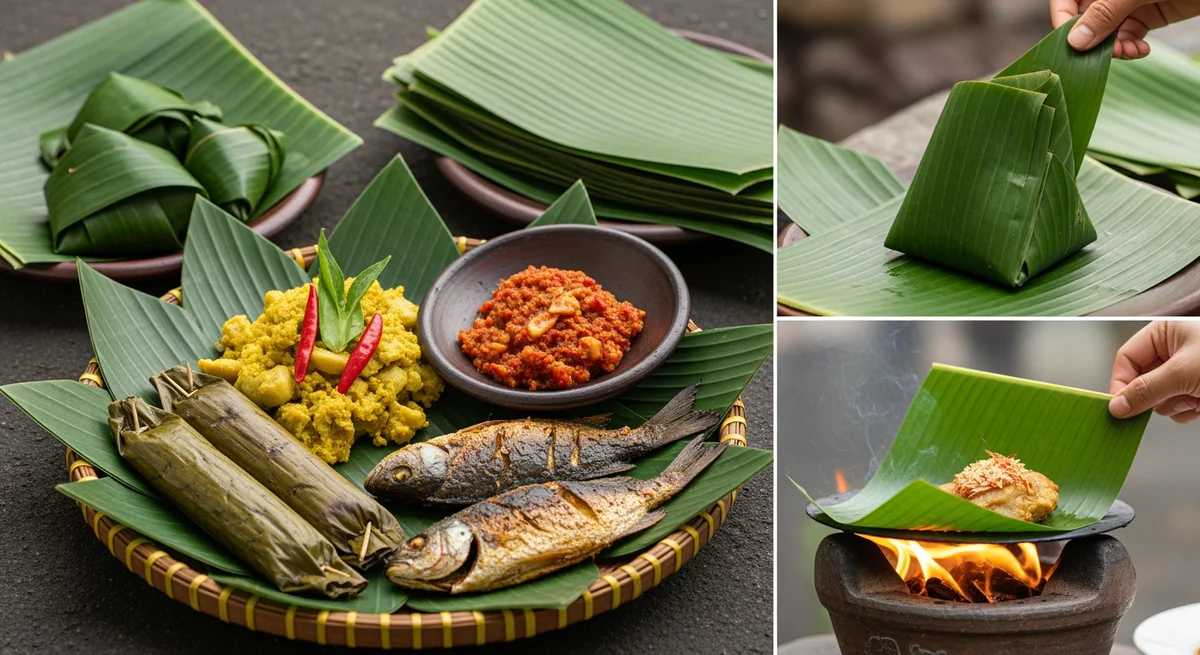
Banana Leaves: Bali's Original Kitchen Multi-Tool and Flavor Secret

Bali's Ancient Secret: The Humble Banana Leaf
Long before aluminum foil, parchment paper, or plastic wrap ever graced our kitchens, Balinese cooks had the perfect, sustainable, and utterly transformative kitchen tool growing right in their backyards: the humble banana leaf. In Bali, these vibrant green leaves aren't just a decorative garnish – they are an indispensable cooking vessel, a natural wrapping material, a beautiful serving plate, and, perhaps most importantly, a subtle yet powerful flavor ingredient all in one. They embody a cooking philosophy deeply rooted in nature, resourcefulness, and a profound respect for the ingredients.
More Than Just a Wrapper: The Art of Banana Leaf Cooking
The magic of banana leaves in cooking lies in their versatility and their unique ability to impart a delicate, earthy fragrance to food. When heated, either directly over a flame or through steaming, the leaves become pliable, allowing them to be shaped and folded around various ingredients. This natural encapsulation creates a mini-oven, trapping moisture, steam, and the food's own aromatic compounds, leading to incredibly tender and flavorful results.
One of the most beloved examples is Tum Ayam, the iconic steamed chicken parcels. To prepare them, Balinese cooks carefully select mature banana leaves, which are then softened over an open flame or briefly dipped in hot water until they become flexible and darken to a rich emerald green. This process prevents them from cracking during wrapping. Spiced minced chicken, often mixed with aromatic herbs and spices like galangal, turmeric, and lemongrass, is then meticulously wrapped into neat, rectangular parcels. During the steaming process, the banana leaf acts as a natural pressure cooker, infusing the chicken with its subtle, verdant aroma while keeping it incredibly moist and tender. The result is a fragrant, succulent dish where every bite sings with the essence of Bali.
Beyond Steaming: Grilling, Roasting, and Serving
While steaming is a primary method, banana leaves are equally adept at other cooking techniques:
- Grilling (Pepes): Dishes like Pepes Ikan (spiced fish) or Pepes Jamur (spiced mushrooms) are wrapped in banana leaves and grilled directly over hot coals. The leaf protects the food from direct flame, preventing charring while imparting a smoky, earthy flavor. The gentle heat slowly cooks the ingredients, allowing the spices to meld beautifully.
- Roasting/Baking: In some traditional preparations, banana leaf-wrapped parcels are placed in an oven or even cooked slowly in hot ashes, offering a unique roasting effect that keeps food incredibly juicy.
- Serving Platter: Beyond cooking, banana leaves serve as beautiful, natural, and disposable serving platters. Many traditional Balinese feasts (known as "megibung" or "lawar" gatherings) involve spreading a large banana leaf on a mat and piling various dishes directly onto it, creating a communal and visually stunning dining experience. The slight aroma from the warm food touching the leaf also adds to the sensory pleasure.
The Flavor Secret: A Subtle Infusion
The "flavor secret" isn't an overpowering taste; rather, it's a delicate, grassy, and subtly sweet aroma that the banana leaf imparts when heated. It's an earthy undertone that complements and enhances the spices within the food, creating a unique complexity that cannot be replicated with artificial materials. It adds a freshness and a connection to nature that is integral to Balinese culinary identity.
Sourcing, Preparing, and Storing Your Leaves
To harness the power of banana leaves in your own kitchen:
- Sourcing: Fresh banana leaves can often be found in Asian grocery stores, particularly those catering to Southeast Asian communities. They are usually sold frozen or refrigerated.
- Preparation: Before use, thaw frozen leaves completely. Wipe both sides of the leaf clean with a damp cloth. To make them pliable and prevent cracking during wrapping, you must soften them. This can be done by briefly passing them over an open flame until they change color and become shiny and flexible, or by dipping them in very hot water for a minute or two. Trim away the hard central rib if it's too thick.
- Storage: Unused fresh leaves can be stored wrapped in plastic in the refrigerator for a few days or frozen for several months.
Embrace the Tradition
The banana leaf is more than just a wrapper; it's a symbol of sustainability, resourcefulness, and a profound connection to the natural world that defines Balinese cooking. By incorporating this ancient tool into your culinary repertoire, you're not just cooking; you're participating in a timeless tradition that infuses food with both flavor and soul. Experiment with it, and discover the magic it brings to your dishes.