
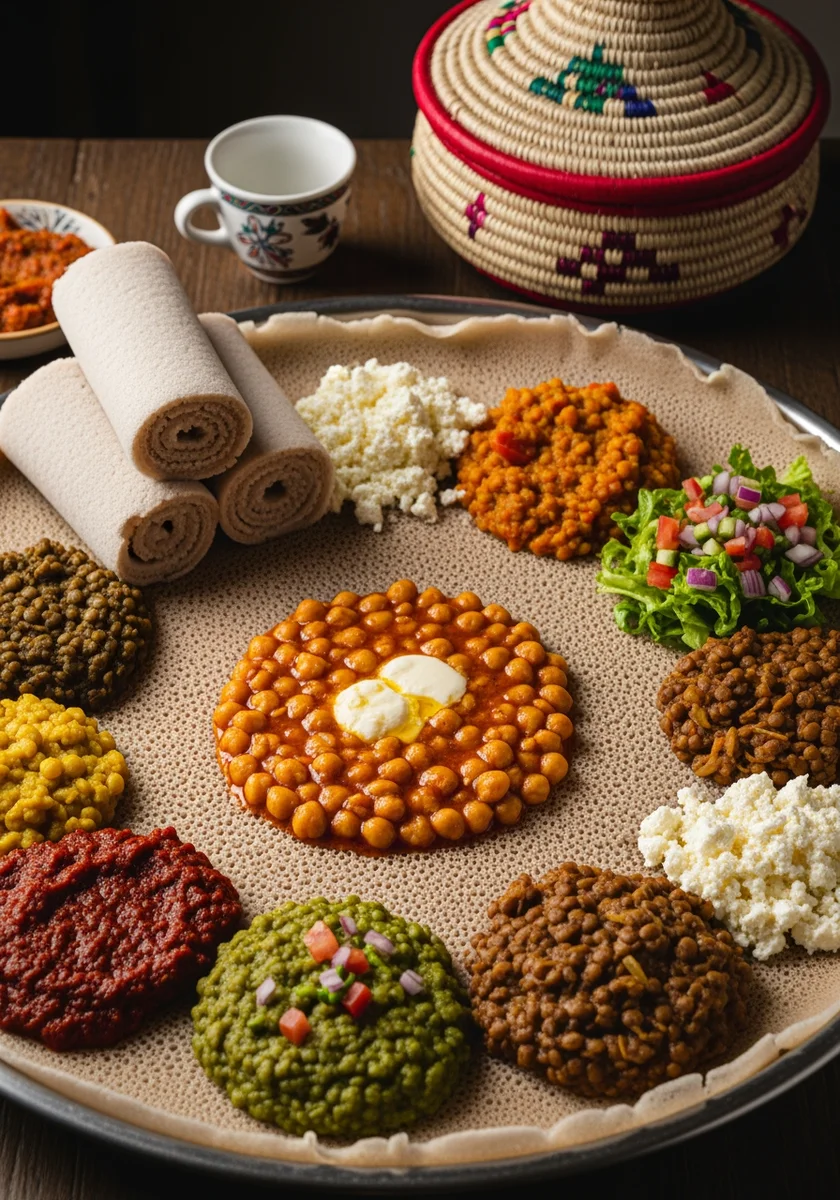
Ethiopian food culture is communal, sensory experience centered around shared platters, rich spiced stews, and the use of spongy flatbread instead of silverware. Core Staples and flavor Injera: A soft, sour, and spongy flatbread made from tiny, healthy teff grains that acts as both plate and utensil. Way Thick, slow-cooked meat or vegetable stews.Berbere: A fiery, complex spice blend of chili peppers, garlic, ginger, and warm spices.Niter Kibbeh: Seasoned, clarified butter infused with herbs. Dining Customs and EtiquetteCommunal Eating: Diners sit together and eat from a single, large shared tray lined with injera and topped with various dishes.Right Hand Only: Food is picked up using only the right hand.Gursha: A warm custom of friendship where a person places a bite of food directly into another person's mouth. Fasting Days: Due to Orthodox Christian traditions, many Ethiopians eat a strictly vegan diet for over 150 days a year, creating a rich variety of lentil and vegetable dishes. The Coffee CeremonyBuna: Coffee is a point of national pride believed to have originated in Ethiopia.The traditional ceremony involves roasting green beans over an open flame, grinding them by hand, and serving three successive rounds of coffee to build community.
About This Cookbook
Growing up Ethiopian, food has always been a focal point in my life, the dinner table being the heart of the home. For me, food is a magnet that brings together friends and family from around the world: the aromatic food and coffee ceremony known make the culture unique and my mom always loved to cook food for my family and we love to eat together in one table and one plate and want this book to be in the memory of my mom gathering our family and like to feed us her amazing Ethiopian dish and good fortune from my mother cooking a delicious meal everyday and always Neghibor and friends at work like the aromatic and spicy food I always make for them . Love mom your hand is blessed by God to cook every meal for our family . Thank you
